
Europe’s ruling on ritual slaughter is factually wrong and legally problematic

Dr. Mark Goldfeder opines that the ruling is factually wrong, legally problematic, discriminatorily hypocritical and systemically dangerous.
‘Realistic idealism’ – reflections on the Abraham Accords

The recent normalization agreements between Israel and a number of Arabic states seem to indicate that a growing number of Arabic/Islamic states prefer to switch from the idealistic ‘perpetrator-victim’ paradigm to a more realistic approach – a switch from a situation of captivity and stagnation to a future of peace, prosperity and security.
Court of Justice (EU) upholds Flemish ban on ritual slaughter: a blow to the religious freedom of Jews and Muslims
On 17 December 2020 the Grand Chamber of the Court of Justice of the EU ruled that a Decree by the Flemish Region that requires animals to be stunned prior to slaughter to reduce their suffering does not contravene European law. This judgement is a serious threat to the freedom of religion in Europe.
Analyzing Trump’s Middle East Peace

This book review was written before the US Presidential election. Even though Trump lost the election, the historical narrative of his four years in regard to Israel and the Middle East are important reading, as its effects will be felt for years to come.
Spreading Terror Among the Civilian Population During the 2014 Gaza Conflict

In 2014, Hamas and other Palestinian armed groups violated the international law prohibition against spreading terror among the civilian population. These acts continue up to the present day and amount to violations of international humanitarian law and war crimes.
European Court: calls for Boycott of Israeli products are allowed under Freedom of Expression – Commentary

The European Court of Human Rights (ECt.HR) has ruled that calls for boycott of Israeli products are justified under European human rights law. This case raises serious policy issues. BDS activities are at their core discriminatory and anti-Semitic.
European Court: calls for Boycott of Israeli products are allowed under Freedom of Expression – the Judgment
The European Court of Human Rights (ECt.HR) has ruled that calls for boycott of Israeli products are justified under European human rights law. This case raises serious policy issues.
Serbia Agrees to Move its Embassy to Jerusalem; Kosovo Agrees to Recognize Israel

In a remarkable ceremony in the White House on 4th September 2020, presided over by US President Trump, Serbia and Kosovo signed agreements to normalize their economic relations. The US-brokered agreements were hailed by the US President as “historic”. In reality they do not constitute a comprehensive “normalization” agreement, but resemble little more than an agreement to carry out a list of previously-agreed projects.
Advocate General: Ban on Ritual Slaughter Contravenes European Law
On 10 September Advocate General Hogan delivered his much anticipated Opinion in an important case concerning ritual slaughter pending before the Court of Justice of the EU. The case concerns the judicial review of a Decree by the Flemish Region that requires animals to be stunned prior to slaughter to reduce their suffering, thereby effectively prohibiting the slaughter of animals according to Jewish and Muslim rites. The case was brought before the Belgian Constitutional Court, which decided to stay the proceedings and request the CJEU to give a preliminary ruling on the compatibility of the Flemish legislation with European law. AG Hogan suggests that the Flemish Law proscribing slaughter of animals without stunning, including religious slaughter rites, is incompatible with EU law. He proposes that Member States should be allowed to adopt stricter rules than those contained in EU law on animal slaughter, but the prescribed derogation protecting religious rites must be protected.
A Layperson’s Guide to Some Basic Concepts in International Law and the Israeli-Palestinian Conflict

International law can be confusing even for lawyers and law students who are trying to grasp its basic concepts. What do terms like “conquest”, “belligerent occupation”, “annexation”, “statehood”, “non-self-governing territory” and “the right to self-determination” mean? To the average non-lawyer, these terms might sound like a completely foreign language. In this article, we hope to provide a simple layperson’s guide to some basic concepts in international law, and their relevance to the Israeli-Palestinian conflict.
International Law for Just One Nation

Two books examine the details behind arguments about the legality of settlements – a review by Prof. Eugene Kontorovich.
The Palestinian ‘Refugee’ Problem and the Missing Peace

Prof. Joseph Spoerl compares the different approaches taken by Palestinians and Germans to the dislocations that avoidable wars of their own causing inflicted on these two peoples in the 1940s.
George Orwell and EU Law on Products From Judea and Samaria

The EU is conditioning the minds of European consumers to fit the world-view of the bureaucrats in Brussels. This is morally wrong and breaches international law. George Orwell saw it coming in 1984.
Dutch Watchdog Threatens to Fine Importer of Israeli Goods
The EU claims that labels on products made by Jews in Judea or Samaria are “misleading” if they do not specify the product is made in a “settlement” in the “West Bank”. But actually it is the EU that is misleading consumers.
The Response of the ICC Prosecutor to the Amici Curiae – An Analysis

Prof. Gregory Rose and Andrew Tucker analyze the Response of the Prosecutor of the ICC to amici curiae ‘observations’ concerning the ‘Situation in Palestine’.
Palestinians and Israelis will both gain from Israeli sovereignty over the West Bank

Against all the negative rhetoric and criticism of the Israeli Government’s plans to apply its civilian law to parts of the ‘West Bank’ professor Bell puts the benefits for both parties.
The Continuing Significance of the Mandate for Palestine under International Law
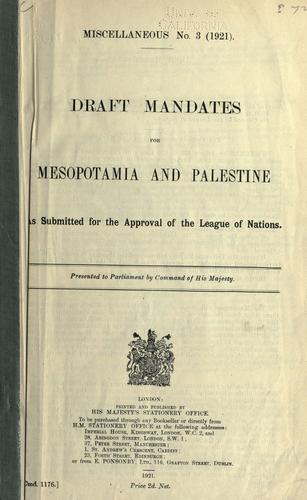
It is often argued that the Mandate for Palestine ended with the withdrawl of the British on 15 May 1948. In this article Dr. Matthijs de Blois cogently argues that this is a misconception under international law.
Israel’s Proposed “Annexation” of the ‘West Bank’ Under International Law – Q&A

There is much confusion and controversy about the plan of the Israeli government to extend its legal administration and excercise its sovereignty in certain parts of Judea and Samaria per 1 July 2020. This Q&A is intended to assist the reader in understanding what international law says about the plans.
An Open Letter to the Israeli Government Condemning Annexation – A Response

In response to the Open Letter in Opinio Juris about the plans of the Israeli Government to “annex” certain parts of the “West Bank”, the author points at the misrepresentation of the planned act as ‘annexation’; you cannot annex territory where you already possess sovereignty.
A Tale of Two Cities – Oslo vs. San Remo
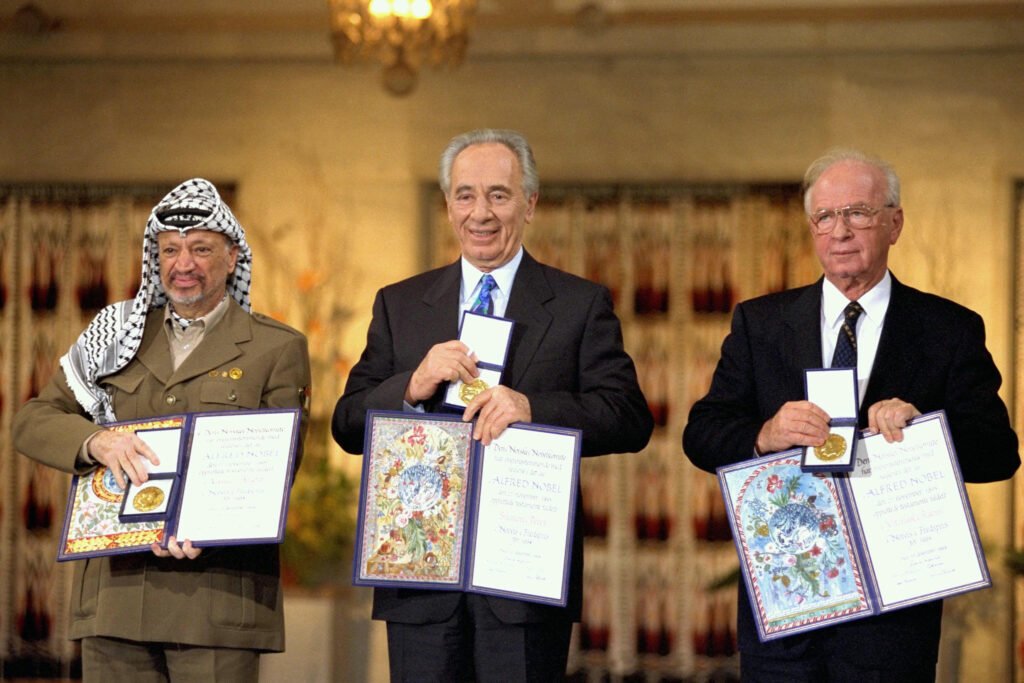
The author compares the San Remo Resolution of 1920 with the Oslo Accords of the 1990’s and draws a striking conclusion.